
Buyer guide
How to Choose a Tactical Gear Manufacturer: A B2B Buyer’s Checklist
A practical framework for B2B buyers evaluating tactical gear suppliers, RFQs, samples and shipment inspection.
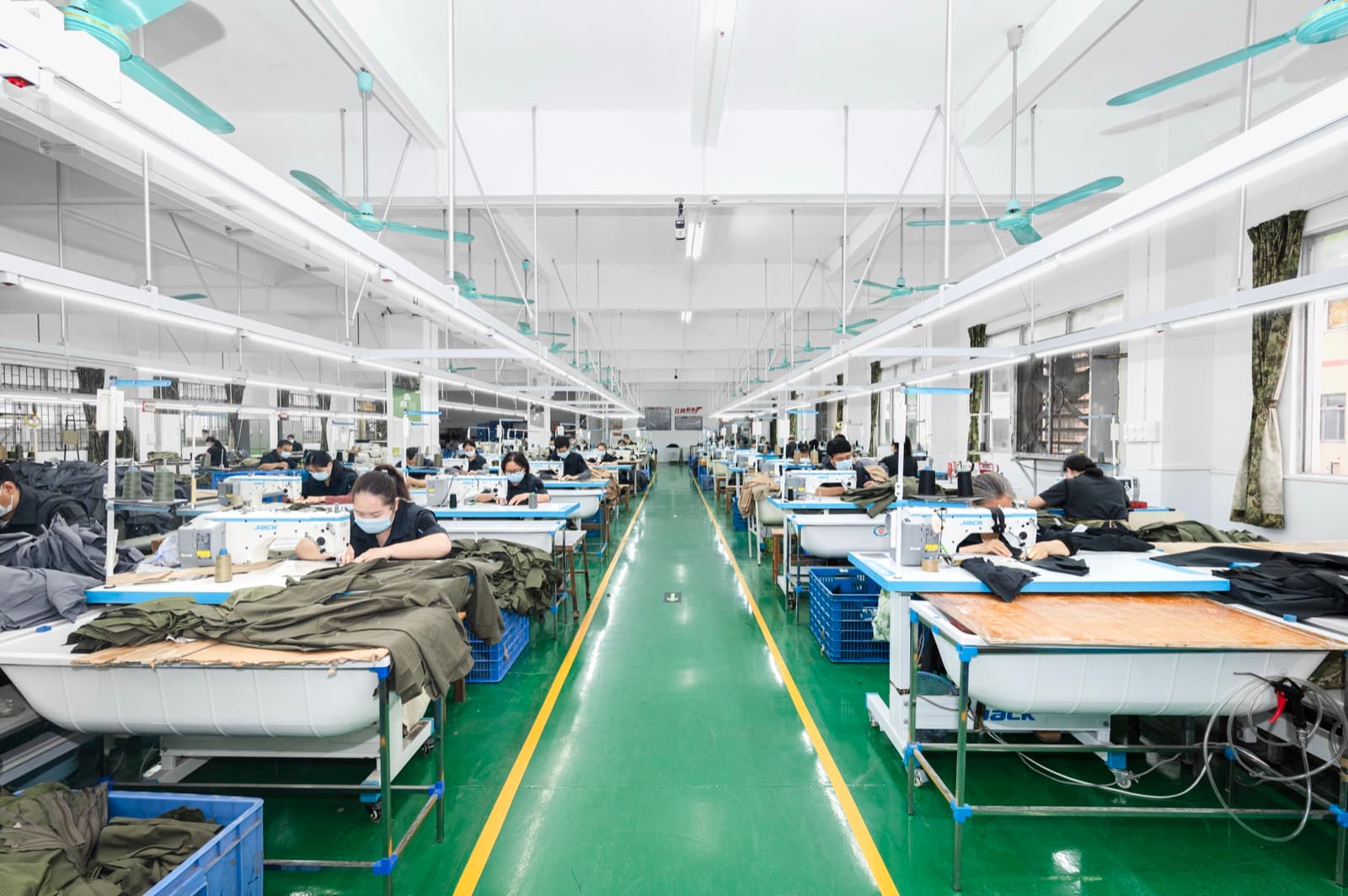
How to Choose a Tactical Gear Manufacturer: A B2B Buyer’s Checklist for OEM, ODM and Bulk Sourcing
Short answer: choose a tactical gear manufacturer by matching its proven product category, development process, material-control evidence, sample discipline, inspection plan and communication process to your actual order. A polished catalogue alone is not enough. The right supplier can translate a written requirement into an approved sample and a repeatable bulk specification; the wrong one leaves essential decisions undefined until production is already under way.
For a distributor, reseller, project buyer or brand owner, tactical sourcing often looks simple at first: compare prices, select a style and issue a purchase order. In practice, the risk lives in the details. Does “tactical vest” mean the same load layout, panel construction and size range to both parties? Is the requested fabric an exact, documented material or a broad description? Which reference sample is controlling when photos, drawings and messages disagree? Who approves substitutions before cutting begins?
This guide gives procurement teams a practical way to assess a tactical gear manufacturer before a first bulk order. It applies to carriers, pouches, belts, uniforms, gloves and related outdoor functional equipment. It does not replace a project-specific technical specification or any safety, legal, import or end-use review required in your market.
Start with the buying scenario, not the supplier list
Before searching for factories, write down what success looks like for the order. A promotional retail programme, a distributor replenishment order and a multi-location training project can require very different supplier capabilities.
Define the product family and its use case
Be specific about the category you are sourcing. A supplier that is comfortable with apparel may not be the best fit for load-bearing equipment, while a factory focused on sewn gear may not handle footwear or complex hardware in-house. State whether the product will be used for range training, outdoor work, airsoft, hunting, uniform programmes, retail resale or another civilian use. The intended use affects fabric weight, mobility, pocket configuration, colour expectations, labelling and packaging.
For example, a request for a plate carrier should identify the intended plate format, adjustment range, load layout, front-panel compatibility, pouch requirement and whether the buyer needs a reference design, a stocked base style or a new development. A request for a uniform should distinguish shirt, trousers, jacket, seasonal fabric, grading range, camouflage or solid colour, logo application and care-label language. Avoid using a product name as the entire brief.
Establish the commercial boundaries early
Your request for quotation should state the estimated quantity by SKU, colour and size; target delivery window; destination; packaging expectation; preferred Incoterm; required documents; sample need; and decision deadline. Do not treat a preliminary price as a final production commitment. Ask the supplier to list the assumptions behind its quote, including whether tooling, logo work, development, test reports, labels, cartons and freight are included or excluded.
A good manufacturer should be able to ask clarifying questions. Silence can be less reassuring than a supplier who says a requirement needs definition before pricing. Clear questions at the RFQ stage usually prevent expensive changes later.
Evaluate category fit before comparing unit prices
The first screen is not “who has the lowest quotation?” It is “who has relevant process experience for this construction?” Compare suppliers against the exact product family you want to buy.
Ask for relevant, current product evidence
Request a concise set of materials that directly relates to your order:
- Product photos from several angles, including construction details rather than only marketing renders.
- A current catalogue or line sheet identifying product families and available colourways.
- A size chart or drawing where sizing matters.
- A sample specification, bill of materials or material list where the supplier is prepared to share it.
- Examples of packaging, labels and carton markings if these are part of your programme.
The objective is not to collect the largest presentation. It is to see whether the supplier understands the construction you are asking it to make. A useful conversation follows the path of the product: fabric or laminate, webbing, hardware, thread, pattern, sewing sequence, inspection points and packing. Vague answers such as “same as picture” should be turned into written acceptance criteria.
Separate product evidence from marketing claims
Claims about durability, origin, performance or compatibility should be supported by documentation appropriate to the claim. If a buyer requires a named fabric, zipper, buckle, hook-and-loop system or camouflage specification, ask how it will be identified in the order documents and what evidence will accompany the approved sample. Do not assume a trade name in an online listing guarantees the exact component in a bulk shipment.
For a first collaboration, it is sensible to ask the supplier to identify which details it can control directly and which components are sourced externally. This does not automatically make external sourcing a problem; it makes the supply chain visible. The buyer can then decide whether approvals, incoming checks, certificates of conformity or batch records are needed for the order.
Turn product requirements into an RFQ that can be quoted accurately
An RFQ is the reference point for price, sample approval and bulk inspection. The best time to remove ambiguity is before the supplier calculates consumption, purchases materials or opens a pattern.
Include a technical brief, even for a stocked design
Attach reference photos, a sketch or a technical pack where possible. Then describe what must match and what may vary. For sewn tactical gear, the brief should normally cover:
- Product name, SKU and intended application.
- Overall dimensions and tolerances where relevant.
- Fabric, lining, webbing, mesh, foam, binding, thread and hardware requirements.
- Colour standard, camouflage artwork or approved colour reference.
- Stitching expectations at high-load locations, reinforcement areas and edge finishing.
- Attachment layout, pocket configuration and compatibility requirements.
- Size range, grading approach and measurement method for apparel.
- Branding, labels, hangtags, barcodes, manuals and packaging.
- Carton pack, destination marks and any inspection documents required before release.
If a detail is still open, label it as an open decision. Do not bury it in a chat message. A version-controlled specification, with revision dates and approvals, is easier to manage than a collection of screenshots.
Request a transparent quotation structure
Compare like with like. Ask each candidate supplier to break out, or at least clarify, the basis of its offer: product price, sample charge, development or tooling, logo application, packaging, order minimum by colour or size, payment terms, sample lead time, bulk lead time and shipping assumptions. A quotation that looks lower may be based on fewer accessories, simpler packaging, a different fabric or an undefined inspection standard.
Price remains important, but it is a final comparison after the technical baseline is aligned. The cheapest quote can be the most expensive outcome if it creates rework, delays or a shipment that cannot be sold through your channel.
Use the sample stage as a decision gate
A sample should answer questions, not merely look attractive for approval photos. Agree in writing on what type of sample you are reviewing: a development sample, pre-production sample, size-set sample, colour lab dip, packaging sample or final production reference. Each has a different purpose.
Review a sample against the written brief
Create a simple sample-review sheet with columns for requirement, observation, decision and action owner. Check dimensions, adjustment range, placement of key elements, material feel and appearance, stitching consistency, closures, labelling, branding, packaging and any function specific to the product. Photograph observations and mark the location when requesting a change.
For a carrier or pouch, pay particular attention to load-bearing seams, webbing alignment, edge binding, hook-and-loop coverage, drain holes where specified, panel attachment and adjustment hardware. For a uniform, inspect measurement points, seam allowance, pocket placement, reinforcements, closures, colour consistency and the relationship between size chart and garment measurements. The exact test method, performance target and acceptance threshold should be agreed by the buyer and supplier rather than implied by generic language.
Freeze the approved reference before bulk production
Once a sample is accepted, record the version, photos, date, signed changes and material substitutions, if any. The pre-production reference should be available to the people making and inspecting the bulk goods. If the buyer requests a change after approval, the supplier should confirm the price, timing and consequences before proceeding.
This step is where customer requirements become a production instruction. It protects both sides: the buyer gets a benchmark for inspection, and the manufacturer gets a clear basis for execution.
Mid-article CTA — turn your brief into a quote-ready request
Have a product list, reference photo or technical pack? Send it with quantities, target market and required delivery date. Send Your Requirements to receive a structured B2B follow-up rather than a generic catalogue response.
Ask how quality is controlled, then agree how it will be checked
“We have strict QC” is not an inspection plan. Ask where the manufacturer expects to inspect the product and which records it can provide. For a sewn product, a sensible process may include material receipt checks, first-piece or line-start confirmation, in-process checks, finished-product inspection and packing verification. The exact process will differ by construction and order size.
Focus on measurable control points
Discuss the characteristics that could make the product unacceptable: incorrect fabric or colour, wrong measurements, missing or reversed components, uneven stitching, damaged hardware, loose threads, weak reinforcements, incorrect labels, mismatched size stickers or carton errors. Then decide how the supplier will identify, isolate and correct those issues.
For high-stress sewn areas, do not rely on the word “reinforced” alone. Define the reinforcement location and pattern, and agree how the approved sample demonstrates it. If bartack stitching is important, describe the location, length or count as appropriate to the design and require it to be visible during sample approval and inspection. If a material claim matters, decide whether a supplier declaration, purchase record, third-party document, approved swatch or another form of evidence is needed.
Plan pre-shipment inspection before production starts
For a meaningful bulk order, agree the inspection timing, sample rule, defect definitions and release authority before the goods are packed for export. Many buyers use an agreed acceptance sampling plan; the exact AQL level or other method should be selected for the product and commercial risk, not copied blindly from another programme. Define critical, major and minor defects in plain language and include measurement checks, appearance, function, labelling, assortment and carton marks.
If you appoint a third-party inspector, share the approved sample and approved specification with that party. A shipment inspection is only as useful as the reference documents behind it. Inspection should not be presented as a substitute for a supplier’s own process control; it is a final verification layer.
Check communication, documentation and project ownership
Many sourcing problems are coordination problems. During supplier evaluation, observe how the team manages revision history, answers technical questions, translates a change into an action and flags a risk. Fast replies are useful, but precise replies are more valuable.
Look for a workable project routine
Agree a single commercial contact and, where appropriate, a technical contact. Set the language, file format, time-zone expectations and approval route. Use a shared version of the RFQ, purchase order, technical pack and sample comments. Ask for a realistic milestone plan covering sample approval, material confirmation, production start, inspection, packing and shipment preparation.
This is especially important for OEM, ODM or customised work. “Custom” can mean logo application, a colour change, a modified existing pattern or a fully new construction. Each option carries a different development burden. Make the scope visible before promising a launch date to your own customers.
Protect design and commercial information proportionately
When sharing drawings, artwork or customer data, use an appropriate confidentiality agreement and define permitted use in the commercial documents. Clarify who owns custom artwork, patterns, tooling and approved packaging files, and what happens if the programme is paused. Legal terms should be reviewed by qualified counsel for the jurisdictions involved; a blog checklist cannot provide legal advice.
Use a weighted supplier scorecard for the final decision
After calls, sample reviews and quotations, score each supplier against the same criteria. A simple 1–5 score can work when paired with a written note. Suggested weighting for a first B2B order:
| Criterion | Suggested weight | What to verify |
|---|---|---|
| Product-category fit | 25% | Comparable construction, materials and product evidence |
| Requirement clarity | 20% | Questions asked, quotation assumptions and document control |
| Sample quality and response to comments | 20% | Accuracy to brief, corrective actions and approved reference |
| Quality and inspection readiness | 15% | Defined control points and shipment-inspection cooperation |
| Commercial fit | 10% | MOQ, price basis, payment, timing and packaging assumptions |
| Communication and project management | 10% | Responsiveness, revision control and risk escalation |
The weights should change with the project. A time-critical replenishment order may give more weight to delivery planning; a new private-label launch may give more weight to development and document control. The scorecard does not make the decision automatically. It makes trade-offs visible to the purchasing team.
Common mistakes when selecting a tactical gear supplier
The recurring mistakes are predictable: asking for a quote from only a product photo, accepting an undefined material substitution, approving a sample without a revision record, comparing prices built on different specifications, and treating final inspection as the first time quality is considered. Another is assuming one supplier can be the right choice for every tactical category. A specialist partnership can be more reliable than trying to force an unsuitable product into a broad catalogue.
Avoid the opposite mistake too: excessive documentation without decisions. The essential documents should be usable on the factory floor and during inspection. A concise, approved technical pack is better than a long file with unresolved priorities.
FAQ
What should I ask a tactical gear manufacturer before placing a bulk order?
Ask about comparable product capability, quotation assumptions, available materials and hardware, sample process, size or colour options, MOQ by SKU, quality-control checkpoints, inspection cooperation, packaging, lead-time milestones and export documentation. Then put the agreed answers into the RFQ, approved sample record and purchase documents.
How do I verify materials such as branded fabric, zippers or buckles?
First specify the exact component and acceptable alternatives. Then agree what evidence is required for your programme, such as approved swatches, purchase records, supplier declarations or permitted documentation. Check that the approved sample, bulk inspection criteria and purchasing documents use the same description. Do not infer verification solely from a product photo or a listing title.
Should I choose OEM, ODM or a stocked tactical product?
Choose a stocked product when speed and lower development risk matter most. Choose OEM when you have a defined specification or design change you need the supplier to manufacture. Choose ODM when you want to adapt a supplier’s existing development. The best route depends on the degree of differentiation, order quantity, budget, launch timing and control you require. See the companion guide on OEM vs ODM vs private label tactical gear.
Is a pre-shipment inspection enough to control quality?
No. It is an important final check, but quality should be planned from material approval through sample sign-off, in-process controls and packing verification. Pre-shipment inspection is most effective when it uses an agreed sample plan, approved product reference and clear defect definitions.
What information should a tactical gear RFQ include?
Include SKU, intended application, quantities by size and colour, drawings or reference images, materials and hardware, measurements, colour reference, branding, packaging, destination, delivery target, inspection expectations and required documents. Identify which items are fixed and which remain open for supplier recommendation.
Conclusion
Choosing a tactical gear manufacturer is a controlled sourcing decision, not a catalogue comparison. Start with the intended application and a clear technical brief. Screen for relevant construction capability, use samples to lock the reference, agree how materials and workmanship will be inspected, and select on a balanced commercial scorecard. This sequence gives distributors, resellers and project buyers a stronger basis for repeatable bulk supply.
Final CTA — discuss your sourcing brief
If you are evaluating tactical apparel, carriers, belts or related equipment for a B2B programme, share your target product, quantities, market and timeline. Get a Quote or contact Emersongear for a requirements-based discussion. For product browsing, start with the EM7440 plate carrier and EM9501 military uniform pages.
---
SEO information
- SEO title: How to Choose a Tactical Gear Manufacturer | B2B Checklist
- Meta description: A practical B2B checklist for selecting a tactical gear manufacturer: product fit, sampling, materials, QC, RFQs and pre-shipment inspection.
- URL slug: `/blog/how-to-choose-a-tactical-gear-manufacturer`
- Primary keyword: how to choose a tactical gear manufacturer
- Supporting keywords: tactical gear manufacturer checklist; tactical gear supplier; tactical gear OEM manufacturer; tactical gear RFQ; how to inspect tactical gear before bulk shipment
- Schema recommendation: `Article` plus `BreadcrumbList`; add `FAQPage` only when the visible FAQ is published unchanged. Do not add schema for information not visible on the page.
- Trust publishing requirement: Add a real named author and reviewer, their job role, publication/update date, and links to current product documentation before publishing. Verify every product-specific measurement, material, certification and delivery statement against the final approved documents.
Image plan and AI-image prompts
> Editorial safeguard: AI images should illustrate a process, not be presented as evidence of a real shipment, test, facility or customer project. Replace them with dated, permission-cleared original photography where proof is needed.
Image 1 — supplier-review hero
- Purpose / insert position: Hero image, directly below the introduction.
- Caption: “A structured product brief turns a supplier conversation into an executable sourcing plan.”
- ALT text: “Procurement team reviewing tactical gear material swatches and a technical specification sheet.”
- AI prompt: `Editorial B2B sourcing scene, diverse procurement team reviewing fabric swatches, webbing, buckles and a neutral technical drawing on a clean worktable, tactical vest sample shown as an unbranded textile product, modern factory meeting room, soft daylight, documentary photography, premium realistic texture, no weapons, no military operation, no readable confidential text, 16:9.`
Image 2 — construction-detail inspection
- Purpose / insert position: After “Use the sample stage as a decision gate.”
- Caption: “Sample approval should check construction details against the written requirement.”
- ALT text: “Close-up of a quality inspector examining reinforced stitching and webbing on a tactical pouch sample.”
- AI prompt: `Macro documentary product-quality inspection of an unbranded tactical pouch, gloved hands checking reinforced stitching, bar tacks, webbing alignment and edge binding with a measuring gauge, clean inspection table, accurate textile detail, natural industrial light, realistic commercial photography, no logos, no weapons, no misleading test certificate, 4:3.`
Image 3 — packing and shipment inspection
- Purpose / insert position: In “Plan pre-shipment inspection before production starts.”
- Caption: “Packing, assortment and carton marks are part of the shipment inspection scope.”
- ALT text: “Inspector checking packed cartons and product assortment for a B2B tactical equipment shipment.”
- AI prompt: `Professional export shipment inspection scene in a clean warehouse, inspector comparing an approved packing checklist with neutral cartons and neatly packed unbranded textile equipment, barcode labels intentionally unreadable, no brand names, no weapons, no staged pass certificate, realistic logistics photography, muted charcoal and warm grey palette, 16:9.`
Image 4 — approved-sample reference
- Purpose / insert position: Before “Use a weighted supplier scorecard.”
- Caption: “A signed reference sample gives production and inspection a common benchmark.”
- ALT text: “Unbranded tactical carrier sample displayed with colour swatches and labelled approval tags.”
- AI prompt: `High-end editorial flat lay of an unbranded tactical load-bearing carrier sample, colour swatches, measurement tape, neutral approval tags with no readable text, carefully arranged on a dark graphite surface, controlled studio light, authentic sewn textile texture, no weapons, no tactical action scene, 3:2.`
CTA and inquiry-popup plan
| Touchpoint | Placement and trigger | Copy / action |
|---|---|---|
| In-content CTA | After the sample-approval section, about 45–50% scroll depth | “Have a product list, reference photo or technical pack?” Send Your Requirements → `/inquiry` |
| End CTA | Immediately after the conclusion | “Discuss your sourcing brief.” Get a Quote → `/inquiry`; secondary Contact Us → `/contact` |
| Pop-up option | Show once at 40% scroll only if the visitor has not submitted; alternatively after 30 seconds of engaged time. Use exit intent only on desktop, and cap to one impression every 14 days. | Title: “Turn your tactical gear brief into a quote-ready RFQ”. Body: “Share the product category, quantity and target delivery date. Our B2B team can confirm the information needed for a focused quote.” Fields: Name, Email, Phone/WhatsApp (required); Company, Country/Region, Product category, Quantity, Message (optional). Button: “Send My Requirements”. |